
In This Section
The Arts
'Creativity is contagious, pass it on!' (Albert Einstein)
THLT Art Exhibition - July 2025
We were proud to host The Hawksmoor Learning Trust Art Exhibition at Chantry House, Towcester - a vibrant showcase of creativity inspired by the rich and diverse cultures of Africa. This year’s theme sparked imagination across all year groups, encouraging children to explore its landscapes, wildlife, patterns, and traditions through art.
Each school took a unique journey—studying African artists, traditional crafts, and symbolic meanings—to create thoughtful, colourful, and expressive pieces. From bold tribal patterns and striking animal portraits and models to intricate beadwork and storytelling through collage, the children’s work beautifully captured the spirit and beauty of this extraordinary continent.
The exhibition brought together families, friends, and the wider community to celebrate the talents of our young artists. It was more than an art show—it became an opportunity to honour heritage, spark curiosity, and embrace the power of global learning.
Visitors were treated to an inspiring and joyful experience as they explored Africa through the eyes of our children. We even had local budding violinists to provide some music on entry. The event was a true celebration of colour, creativity, and pride.

Artsmark
The school has achieved Artsmark Gold on seven occasions: 2001, 2004, 2007, 2010, 2013, 2019 and 2026 (this award is held by only 2-3% of schools nationally, those who demonstrate a passion and dedication to art, music, dance and drama) - This is a fantastic achievement as we are one of only 14 school nationwide to have held the award since its inception.
The visual and performing arts are integral to the creative ethos adopted at Nicholas Hawksmoor. We are passionate about the expressive contribution engagement in the arts makes to pupils' learning both academically and holistically. Across the Arts, skill development, creative thinking and independent learning inform a broad and stimulating curriculum.
Our aim is to encourage pupils to use the Arts to express their own voice. At Nicholas Hawksmoor our provision for the arts is outstanding; our continued Artsmark Gold success recognises this. With specialist practitioners for the Arts we strive to challenge artistic boundaries thus offering pupils the opportunity to recognise themselves as artists too.
Experiencing and engaging with artistic practitioners first hand is an important part of learning here. Pupils are regularly invited to participate in dance festivals, musical showcases, art exhibitions and drama performances. We have well established links with The Northern Ballet, The Young Shakespeare Company, The Royal Academy of Arts, Birmingham Royal Ballet and the City of Birmingham Symphony Orchestra. Many arts trips and events are organised to support and inform pupils' critical and creative development.
Art & Design
'All children are artists.' (Pablo Picasso)
Curriculum Intent
Our Art & Design curriculum aims to nurture creativity, imagination, and artistic expression in all pupils. Our approach is built on three core concepts:
- Exploring: Encouraging curiosity and investigation of various art forms, techniques, and cultural influences.
- Creating: Developing skills and confidence in producing original artworks using a range of media.
- Expressing: Nurturing the ability to communicate ideas, emotions, and perspectives through art.
Through these core concepts, we strive to:
- Deliver Quality Learning: Our curriculum, led by specialist art teachers in a dedicated art room, ensures a comprehensive and progressive approach to art education. We aim to equip pupils with a wide range of artistic skills and knowledge, enabling them to become confident, creative practitioners. Our specialist teaching provides expert guidance and access to diverse materials and techniques, fostering high-quality artistic experiences.
- Inspire Enthusiasm: We encourage a passion for art that extends beyond the classroom. By exposing students to diverse artists, styles, and cultural traditions, we aim to ignite a lifelong appreciation for the visual arts. Our specialist art teachers bring expertise and enthusiasm, inspiring pupils to push their creative boundaries and develop their own artistic voice.
- Foster Partnerships: We recognize the power of art to connect people and communities. Our curriculum emphasizes collaborative projects, community art initiatives, and engagement with local and international artists, fostering partnerships that enrich our students' artistic experiences. This aligns with our school's ethos of partnership, extending learning beyond our walls.
Our aim is to develop pupils who can think creatively, express themselves confidently, and appreciate the diverse world of art. We aim for children to understand art's relevance in connecting us to our past, present, and future, and to recognize themselves as artists capable of contributing to the rich tapestry of visual culture.
Implementation
Our approach focuses on delivering a comprehensive, engaging art education that builds knowledge and skills progressively:
- Curriculum Structure: Art is taught by specialist teachers in our dedicated art room throughout Key Stages 1 and 2. This ensures high-quality instruction and access to a wide range of materials and resources. Our curriculum balances declarative knowledge with experiential learning, building self-confidence and encouraging independence.
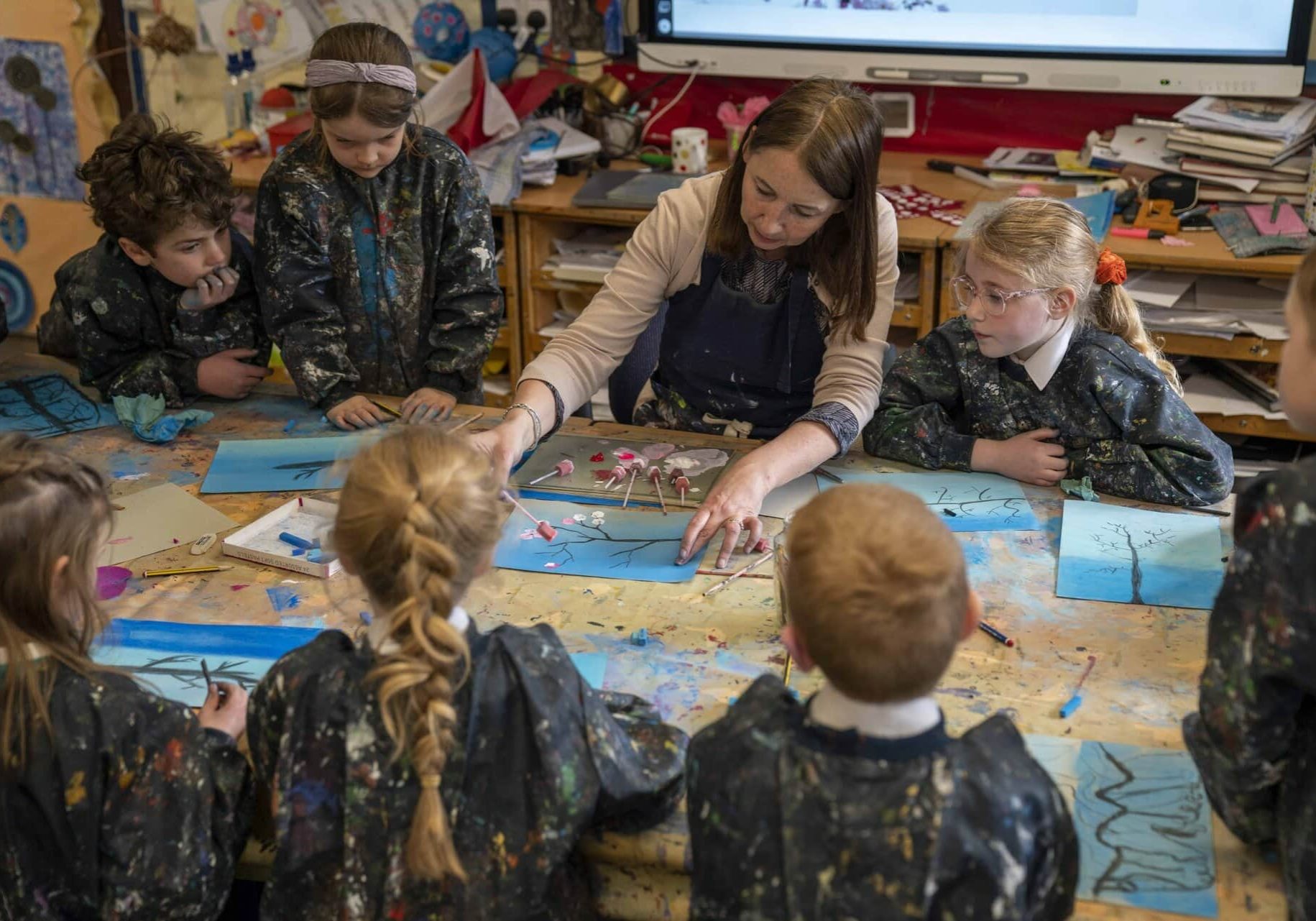
- Exploration: Throughout the curriculum, pupils are encouraged to investigate various art forms, techniques, and cultural influences. This includes studying diverse artists and art movements, experimenting with different media, and exploring art from various cultures and historical periods. Our well-equipped art room allows for hands-on exploration of drawing, painting, sculpture, design and printmaking.
- Creation: We provide ample opportunities for pupils to develop their artistic skills and create original works. Projects are designed to build technical proficiency while encouraging creative problem-solving. Our specialist teachers guide students through the creative process, from initial concept to final execution, fostering confidence and independence in artistic creation.
- Expression: Throughout our art curriculum, we emphasize the importance of self-expression and communication through art. Pupils are encouraged to reflect on their work, discuss their artistic choices, and consider how their art conveys ideas and emotions. Regular critiques and exhibitions provide platforms for students to share their work and learn from each other.
- Sketchbook Development: All children record in sketchbooks, which serve as a personal archive of their artistic journey. These books are used to experiment, annotate, and reflect on their learning, enabling pupils to track their progress and refer back to core knowledge.
- Cultural Engagement: We celebrate and recognize a diverse range of contemporary and traditional artists, designers, and craftspeople from across the globe. This exposure helps children develop fresh perspectives and a deep appreciation for cultural diversity in art.
Our implementation strategy reflects our school ethos through expert instruction and well-resourced facilities; diverse, engaging projects; and partnership through collaborative work and community engagement.
Key Resource
National Curriculum Art & Design
Impact
The impact of our Art curriculum is evident in the following outcomes:
- Artistic Skill and Confidence: Pupils demonstrate progressive development in their artistic skills across various media and techniques. They show confidence in exploring new art forms and tackling creative challenges, reflecting the success of our 'Exploring' and 'Creating' core concepts.
- Creative Expression: Students exhibit the ability to express their ideas, emotions, and perspectives through their artwork. They can discuss their artistic choices and the meanings behind their creations, demonstrating the impact of our 'Expressing' focus.
- Art Appreciation: Pupils show an understanding and appreciation of diverse art forms, styles, and cultural traditions. They can critically analyse artworks, considering context, technique, and meaning, and engage in informed discussions about art.
- Enthusiasm for Art: Students demonstrate a genuine interest in art, often pursuing artistic activities beyond the classroom. This enthusiasm reflects our school's ethos of inspiring a love for learning and creativity.
- Cultural Awareness: Through studying art from various cultures and periods, students develop a broader understanding of the world and its diverse expressions of creativity. They appreciate the role of art in society and its power to communicate across cultural boundaries.
- Technical Proficiency: Pupils demonstrate fluency in a wide range of media, understanding their properties and how to manipulate them effectively. This technical skill supports their ability to realize their creative visions.
- Reflective Practice: Students show the ability to reflect on their own work and that of others, using appropriate artistic vocabulary to articulate their thoughts and feelings about art.
We assess through regular reviews of pupils' sketchbooks, observations of their engagement in art lessons, discussions about their artistic process, and the quality of their finished artworks. The vibrant displays around the school showcase the progression and achievement of our students.
When children leave Nicholas Hawksmoor Primary School, they are equipped with a rich artistic skill set, a confident creative voice, and an appreciation for the power of visual expression. They have a strong foundation in our core concepts of exploring, creating, and expressing, preparing them for continued engagement with art in their future education and personal lives.
Dance
'I do not try to dance better than anyone else. I only try to dance better than myself.' (Mikhail Baryshnikov)
Curriculum Intent
Our dance curriculum aims to develop confident, coordinated, and well-adjusted individuals through the integration of thinking, feeling, and doing. We strive to:
- Enhance social awareness, flexibility, grace, and teamwork skills.
- Promote creativity, personal growth, and problem-solving abilities.
- Provide an outlet for self-expression.
- Foster an enjoyment of dance and movement.
Our curriculum aligns with the EYFS, KS1, and KS2 expectations, progressing from representing ideas through dance in EYFS to performing dances with simple movement patterns in KS1, and finally to executing a range of movement patterns in KS2.
Implementation
Our dance curriculum is implemented through:
- A variety of teaching and learning styles that cater to children of all abilities.
- A focused term of dance within each year group as part of the Physical Education curriculum.
- Creation, practice, and performance of at least one choreographed piece to peers, set to relevant music.
- Progressive skill development from EYFS through Year 6:
- EYFS: Exploring different body movements
- KS1: Developing control and creating simple movement patterns
- Lower KS2: Creating and repeating controlled movements and patterns
- Upper KS2: Composing and performing complex movement sequences
- Exposure to different cultures by exploring various dance styles, their histories, and cultural impacts.
Impact
The impact of our dance curriculum is evident in:
- Performance: Children's ability to demonstrate and perform dance skills independently and in groups and deliver performances in shows, dance festivals and galas.
- Improved physical control, coordination, and confidence.
- Enhanced creativity and self-expression through movement.
- Understanding of dance styles, their features, and cultural significance.
- Developed social skills through collaborative choreography and performance.
Through this comprehensive approach, our dance curriculum nurtures physical skills, creativity, and cultural awareness, contributing to the holistic development of our students.
Drama
'What is drama but life with the dull bits cut out.' (Alfred Hitchcock)
Curriculum Intent:
Our drama approach aims to nurture children's social skills, memory, and imagination while building vocabulary, confidence, and trust. We strive to develop pupils' ability to express themselves creatively, fostering cooperation, communication, and aesthetic appreciation. Our intent is to empower students to improvise, work in role, and create compelling performances that convey emotions and situations effectively. We emphasize the importance of constructive feedback, encouraging students to reflect on their own work and that of others.
Implementation:
Our drama curriculum is designed to provide diverse experiences for all children from Reception to Year 6. We implement our approach through carefully structured activities that build both technical skills and thematic understanding.
- Storytelling is at the heart of our practice, with students learning to script and perform plays that bring narratives to life.
- Physical expression is cultivated through movement exercises, voice work, and facial expressions, allowing children to embody characters and convey emotions non-verbally.
- Collaboration is emphasized in group performances and improvisations, where students learn to work together to create cohesive dramatic pieces.
We use various techniques, including teacher-in-role, to challenge students and expand their dramatic repertoire. Our implementation also includes exposure to live performances and screen adaptations, encouraging critical analysis and appreciation of theatrical elements.
Impact:
The impact of our drama approach is evident in the holistic development of our students. Through storytelling, they enhance their language skills and creativity, becoming more articulate and imaginative in their expression. Physical expression activities boost their confidence and body awareness, leading to improved presentation skills that extend beyond the drama classroom. Collaboration in drama fosters teamwork, empathy, and social skills, creating a positive impact on students' interactions in all areas of school life.
Students develop a deeper understanding of human emotions and experiences, enhancing their ability to analyse and interpret literature and historical events across the curriculum.
Music
“Music expresses that which cannot be said and on which it is impossible to be silent.” (Victor Hugo)
Curriculum Intent
Our Music curriculum aims to inspire a lifelong love of music in all pupils. Our approach is built on three core concepts:
- Listening and Appraising: Developing critical listening skills and understanding of diverse musical styles.
- Exploring and Composing: Encouraging creativity through musical experimentation and composition.
- Performing: Building confidence and skills in vocal and instrumental performance.
We strive to deliver quality learning through a comprehensive curriculum, inspire by exposing students to diverse musical experiences, and collaborate through music-making. We aim to develop pupils who can express themselves musically and appreciate diverse musical traditions.
Implementation
Our approach focuses on delivering engaging music education that builds knowledge and skills progressively:
- We use the Charanga curriculum across Reception to Year 6, ensuring a consistent approach that meets National Curriculum requirements.
- Pupils engage with diverse musical repertoire, developing critical listening skills and cultural understanding.
- Opportunities for improvisation and composition encourage creativity and musical understanding.
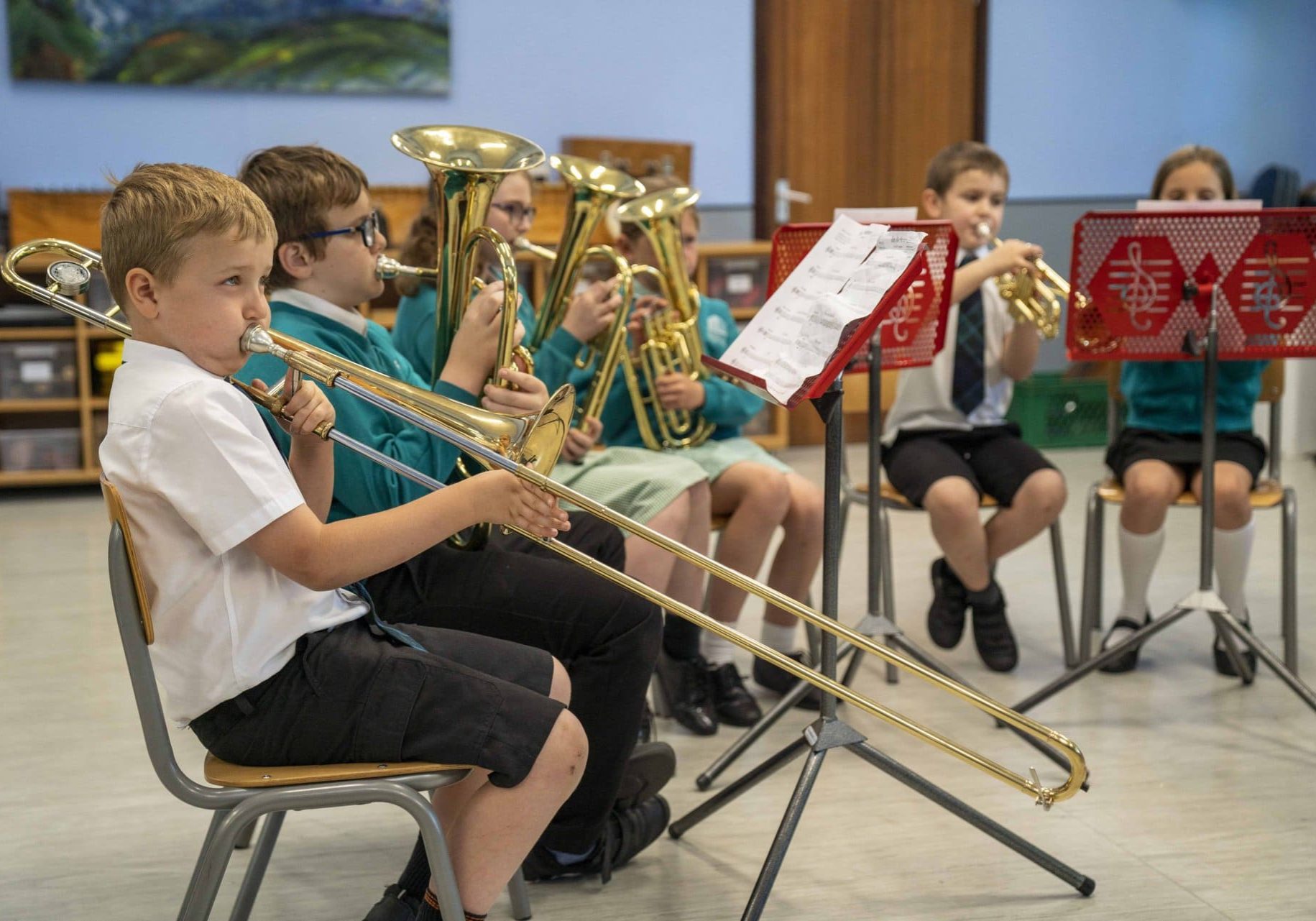
- Regular singing sessions, instrumental lessons (including recorder from Year 2), and performance opportunities are integrated throughout.
- Enrichment activities such as choirs, musical clubs, and participation in events like the Northamptonshire Arts Festival, NMPAT Brass Project, and Rock School further enhance our curriculum.
This strategy reflects our ethos through structured learning, providing diverse musical experiences, and opportunities for collaborative music-making.
Key Resource
NHPS Music Development Plan 2025-26
Impact
The impact of our Music curriculum is evident in:
- Progressive development of musical skills in listening, composing, and performing.
- Genuine enthusiasm for music, often extending beyond the classroom.
- Increased cultural awareness through exposure to diverse musical traditions.
- Enhanced confidence and self-expression through regular performances.
- Improved collaborative skills through ensemble work.
We assess impact through observations, recordings of performances and compositions, and discussions with pupils. The vibrant musical life of our school provides tangible evidence of the curriculum's success.
This approach, grounded in our core concepts and school ethos, ensures a music education that nurtures the next generation of musicians and music enthusiasts.